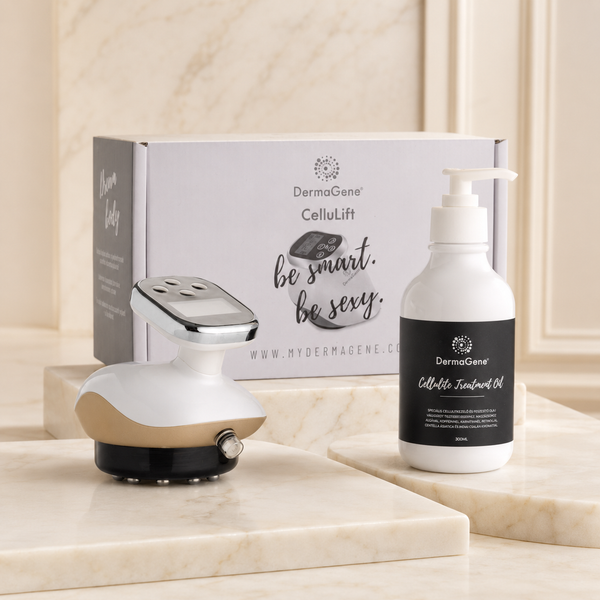
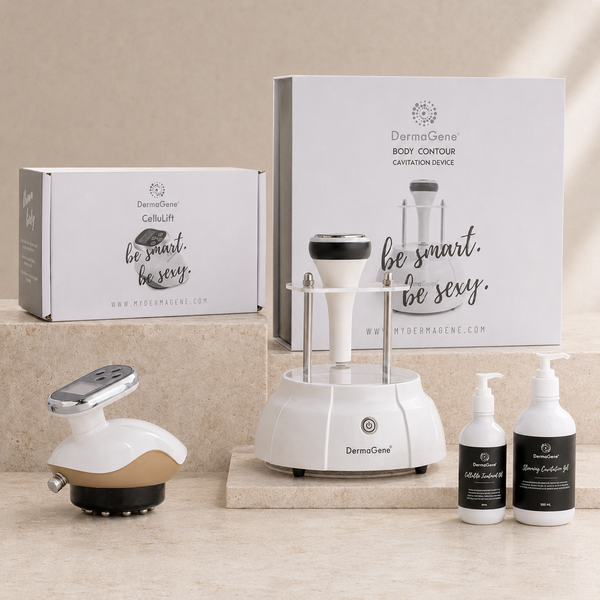
Jede Technologie zielt auf eine andere Schicht ab – zusammen wirken sie dort, wo Cellulite tatsächlich entsteht.
1. Vakuumtherapie – die Kerntechnologie
Dasselbe Prinzip wie bei LPG, Velaslim und Endermologie – jetzt für zu Hause.
Pulsierende Vakuumwellen erzeugen einen kontrollierten Unterdruck unter der Haut und mobilisieren mechanisch das Unterhautgewebe. Das Ergebnis:
✦ Verbesserte Blutzirkulation
✦ Abbau von Fettablagerungen im Bindegewebe
✦ Verbesserte Hautelastizität in Gewebetiefe
Cellulift liefert eine stärkere Vakuumintensität als die meisten Geräte für den Heimgebrauch – konzipiert, um die Tiefe zu erreichen, in der professionelle Behandlungen wirken.
2. Infrarot-Wärmetherapie – Tiefenwärme für das Gewebe
Die Technologie, die das Vakuum besser wirken lässt.
Infrarotwärme dringt in die Haut ein, um die Kollagenproduktion anzuregen, die lokale Durchblutung zu verbessern und das faserige Bindegewebe zu entspannen, das für das dellige Erscheinungsbild von Cellulite verantwortlich ist. Wärme macht das Gewebe empfänglicher für die Vakuumstimulation – die beiden Technologien wirken zusammen besser als jede für sich allein.
3. EMS-Körperstimulation – Muskelaktivierung unter der Oberfläche
Was Bewegung von außen unterstützt – EMS unterstützt von innen.
EMS liefert kontrollierte elektrische Impulse, die das Muskelgewebe aktivieren – dasselbe Signal, das das Gehirn während der Bewegung sendet. Das Ergebnis:
✦ Verbesserter Muskeltonus unter der Hautoberfläche
✦ Gesteigerter lokaler Stoffwechsel
✦ Strafferes, glatteres Erscheinungsbild im Laufe der Zeit
4. Magnetwellentherapie – Unterstützung für Zirkulation und Zellen
Bekämpft die Ursache – nicht nur das oberflächliche Erscheinungsbild.
Gepulste Magnetwellentherapie unterstützt die Mikrozirkulation und die Zellregeneration im Unterhautgewebe – und bekämpft so schlechten lymphatischen und vaskulären Fluss, einer der Hauptursachen für Cellulite. Eine verbesserte Durchblutung hilft dem Gewebe, mehr Sauerstoff aufzunehmen und unterstützt die natürliche Ausscheidung von Abfallprodukten.
5. Rotlichttherapie – zelluläre Vitalität
Licht, das auf zellulärer Ebene wirkt.
Rotlichttherapie vitalisiert Hautzellen, beschleunigt die lokale Durchblutung und erhöht die Sauerstoffversorgung des behandelten Gewebes. Sie stärkt das Bindegewebe, unterstützt die Stoffwechselaktivität und trägt zur allgemeinen Hautfestigkeit bei – und vervollständigt damit das Fünf-Technologie-Protokoll.
Fünf Technologien. Arbeiten zusammen, auf jeder Ebene. Das komplette Heimprotokoll für Frauen, die dauerhafte Ergebnisse wünschen – nicht nur für diesen Sommer.